S K

Ethics and AI. The future of law and philosophy.

AI Compliance and Regulation: Mastering the Maze of Legal Requirements for Artificial Intelligence

Introduction As artificial intelligence (AI) becomes an integral part of more industries, the stakes around compliance and regulation are higher than ever. Governments and regulatory bodies across the globe are tightening the reins, crafting detailed frameworks to ensure AI systems are not only powerful but responsible. This article dives deep into the world of AI […]
AI Compliance and Regulation: Mastering the Maze of Legal Requirements for Artificial Intelligence Read More »

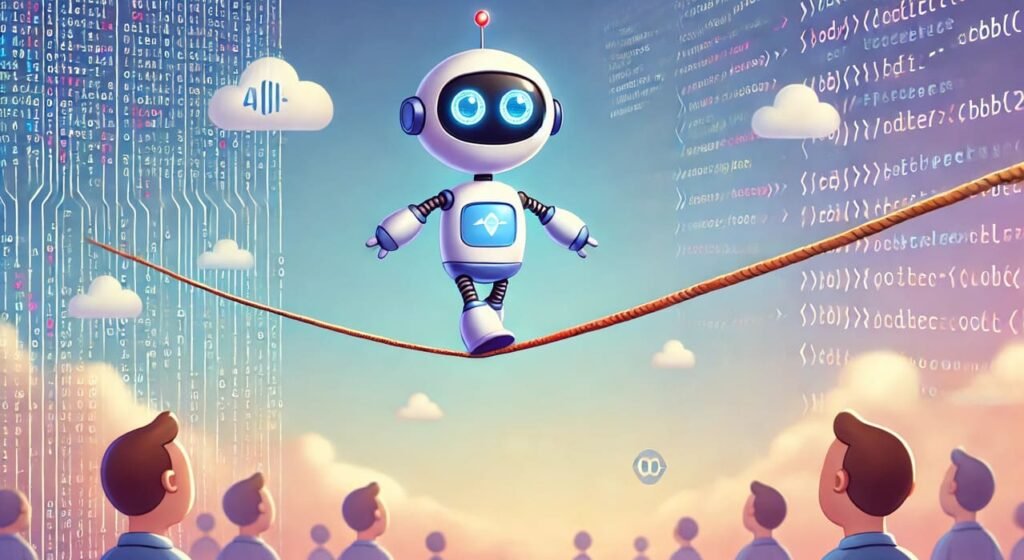
Visual representation of AI alignment, depicting an AI robot walking a tightrope while humans watch in hopes of seeing desired outcomes. The illustration emphasizes the importance of aligning AI behavior with human values and ethics.

AI Alignment: Ensuring AI Acts in Accordance with Human Values | InfoSecured.ai

In the rapidly evolving landscape of artificial intelligence (AI), the concept of alignment plays a pivotal role in ensuring that AI systems act in accordance with human values and expectations. At its core, alignment refers to the process of adjusting AI models to produce outcomes that are not only effective but also ethical and beneficial

AI Alignment: Ensuring AI Acts in Accordance with Human Values | InfoSecured.ai Read More »

Visual representation of anthropomorphism in AI, showing a chatbot designed with human-like traits engaging with a user in a natural conversation.

Anthropomorphism in AI: Why We Attribute Human Traits to Chatbots | InfoSecured.ai

Humans have a tendency to attribute human-like qualities to non-human entities, a psychological phenomenon known as anthropomorphism. This becomes particularly relevant in the age of artificial intelligence, where interactions with AI chatbots, voice assistants, and other automated systems often blur the lines between human and machine. Anthropomorphism plays a significant role in shaping how users

Anthropomorphism in AI: Why We Attribute Human Traits to Chatbots | InfoSecured.ai Read More »

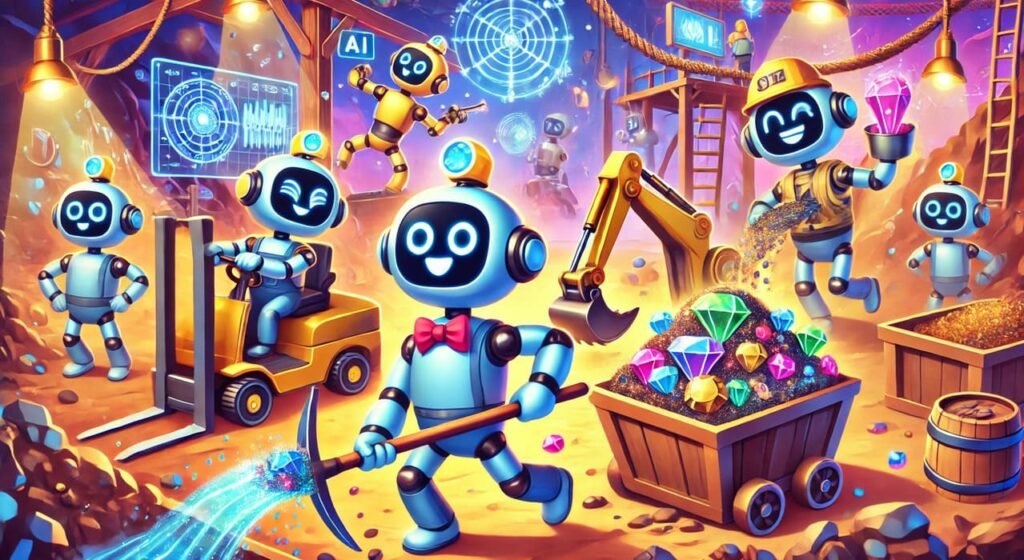
Visual representation of AI-powered autonomous agents in action, highlighting their role in diamond mines as fully automated systems doing human work.

Autonomous Agents: AI Models Capable of Accomplishing Tasks Autonomously

Artificial Intelligence (AI) has evolved significantly, and one of its most profound advancements is the development of autonomous agents. These AI models are designed to complete specific tasks without human intervention, relying on advanced algorithms and real-time data processing. From self-driving cars to robotic process automation in industries, autonomous agents are reshaping the landscape of

Autonomous Agents: AI Models Capable of Accomplishing Tasks Autonomously Read More »

Illustration of a chatbot simulating a human conversation through text on a Commodore 64 computer.

Chatbot: AI Simulating Human Conversations for Seamless Interactions | InfoSecured.ai

A chatbot is an artificial intelligence (AI) program designed to simulate human-like conversations, typically through text-based interfaces. These programs utilize advanced techniques such as Natural Language Processing (NLP) and machine learning to understand and respond to user input in a way that mimics human interaction. Chatbots are increasingly being integrated into websites, messaging platforms, and

Chatbot: AI Simulating Human Conversations for Seamless Interactions | InfoSecured.ai Read More »

Bias in AI: How Large Language Models Propagate Stereotypes and How to Fix It | InfoSecured.ai

The rapid evolution of artificial intelligence (AI) technologies, particularly large language models (LLMs), has brought significant benefits to various industries, from healthcare to customer service. However, as these models become more integrated into daily life, a critical issue has surfaced: bias. LLMs, which are trained on massive datasets scraped from the internet, can unintentionally propagate

Bias in AI: How Large Language Models Propagate Stereotypes and How to Fix It | InfoSecured.ai Read More »

An illustration of ChatGPT, showing how OpenAI’s large language models simulate human-like text conversations in various applications like customer service and content creation.

ChatGPT: OpenAI’s Groundbreaking AI Chatbot is Powered by LLMs

ChatGPT, developed by OpenAI, has set a new standard in artificial intelligence (AI) by delivering human-like text generation capabilities through large language models (LLMs). Powered by the Generative Pre-trained Transformer (GPT) architecture, ChatGPT has revolutionized multiple sectors by enhancing efficiency in areas like customer service, content creation, education, and more. However, the power and potential

ChatGPT: OpenAI’s Groundbreaking AI Chatbot is Powered by LLMs Read More »

Cognitive Computing: Another Term for Artificial Intelligence?

When discussing advanced technologies like Artificial Intelligence (AI) and Cognitive Computing, it’s easy to conflate the two terms. While they share similarities, these concepts have distinct objectives and approaches, creating important differences in how they are applied in industries like healthcare, finance, and customer service. This article will explore the differences and overlaps between AI

Cognitive Computing: Another Term for Artificial Intelligence? Read More »